

LiDAR Scanning and As-Built Drawings for a Hotel Lobby and Restaurant Renovation in Buckhead Atlanta

Project Description
Precision As-Built Documentation for Hospitality Renovations in Atlanta
When renovating hospitality spaces, accurate existing conditions documentation is critical for successful design and construction. Scan Skunks recently completed a LiDAR scanning and as-built documentation project for a hotel lobby and restaurant renovation in the Buckhead district of Atlanta, Georgia. The project involved capturing approximately 6,000 square feet of interior space in a single day and delivering detailed documentation to support the interior design team's renovation plans.
The hospitality industry often presents unique challenges for renovation projects. Existing architectural details, decorative finishes, and operational constraints require a high level of accuracy to ensure design concepts can be implemented efficiently. By utilizing terrestrial LiDAR scanning technology, Scan Skunks was able to provide highly detailed existing conditions information while minimizing disruption to the property.
One-Day LiDAR Scan of a Buckhead Hotel Interior As-Built Drawings
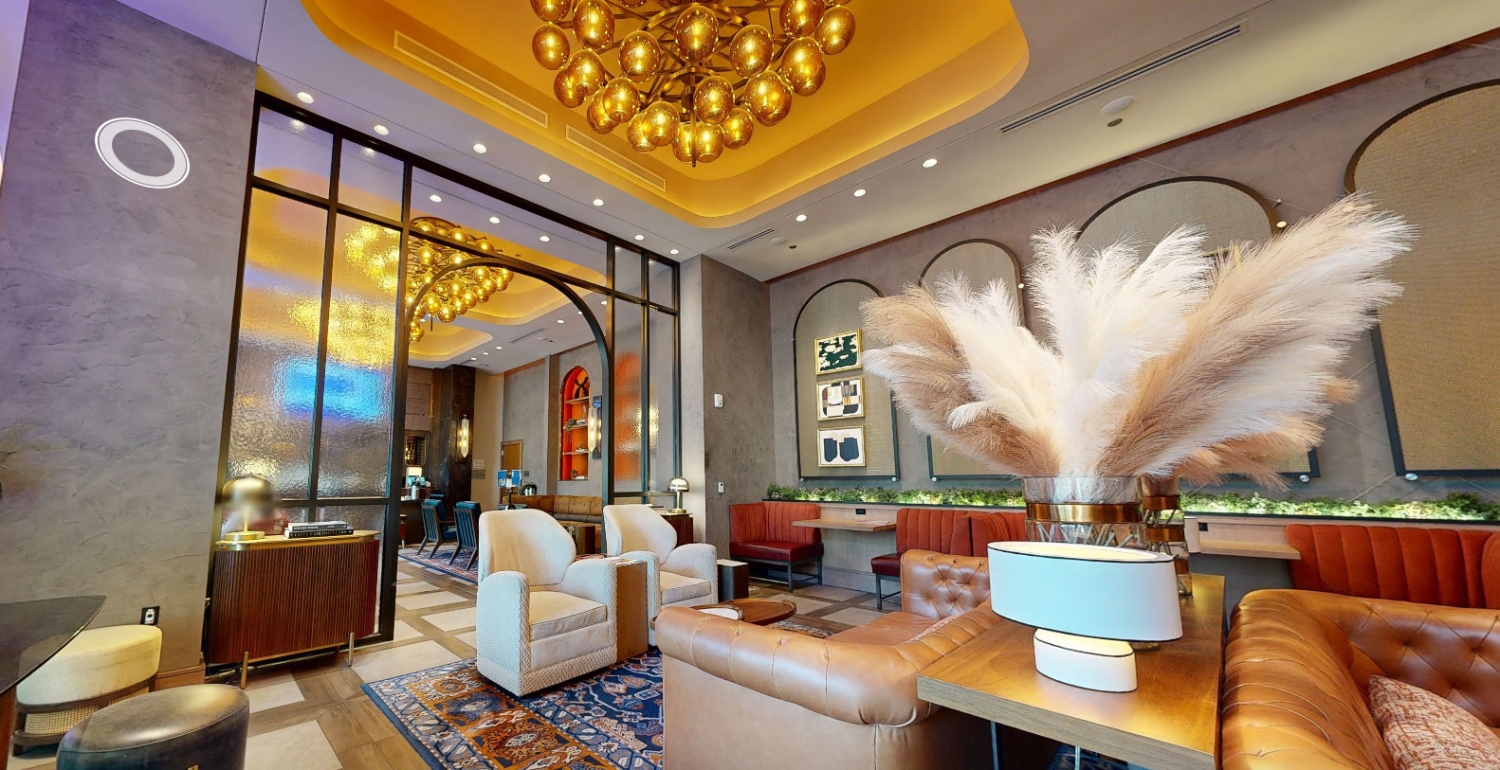
The project scope included the hotel's main lobby and restaurant areas, both of which featured intricate architectural elements and decorative wall treatments. These existing features needed to be accurately documented so the interior design team could incorporate them into their renovation plans.
Using advanced LiDAR scanning equipment, our team completed the field capture in a single day. Millions of measurements were collected throughout the space, creating a highly accurate point cloud representation of the property's existing conditions.
The speed of LiDAR scanning allows large and complex spaces to be documented far more efficiently than traditional hand-measuring methods. For hospitality projects where access windows can be limited and operational disruptions must be minimized, this technology provides significant advantages.
Capturing Complex Wall Elevations and Architectural Details
One of the primary challenges of this Buckhead hotel project was documenting the intricate wall elevation details found throughout the lobby and restaurant areas.
Decorative wall panels, trim work, architectural reveals, columns, feature walls, and varying ceiling transitions required precise measurements to ensure the design team had reliable information during the renovation process. Traditional field measurement methods often struggle to capture these details comprehensively, especially when dealing with irregular architectural features.
LiDAR scanning allowed every visible surface to be recorded in three dimensions. This provided a complete digital record of the existing space and enabled our production team to accurately extract wall elevations and architectural dimensions directly from the point cloud data.
The result was a highly detailed representation of the property's existing conditions that reduced uncertainty during design development and helped eliminate the need for repeated site visits.
Delivering Accurate 2D CAD Floor Plans
Following the completion of field scanning, the collected point cloud data was processed and converted into professional as-built documentation.
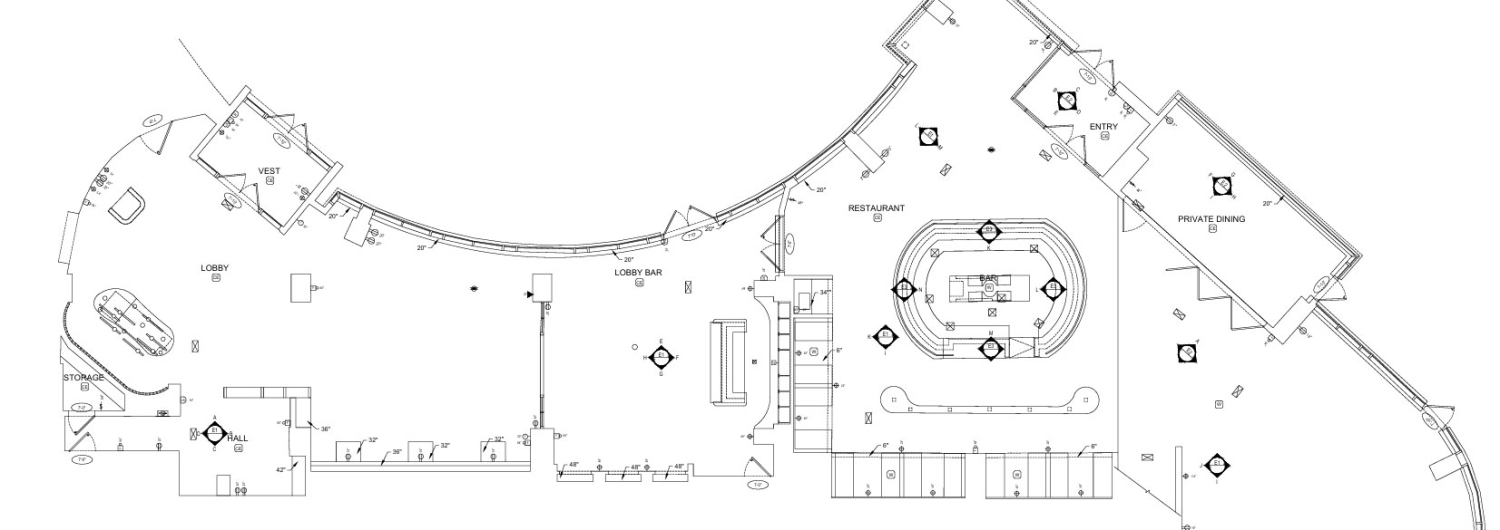
The first deliverable provided to the client was a complete 2D CAD floor plan package. These plans accurately documented the existing layout of the hotel lobby and restaurant spaces, including walls, openings, structural elements, millwork locations, and other key architectural features.
Accurate floor plans provide the foundation for virtually every renovation project. Interior designers, architects, contractors, and ownership teams rely on these drawings to make informed decisions throughout the design and construction process.
By generating plans directly from LiDAR data, Scan Skunks was able to provide a level of accuracy that significantly exceeds what is typically achievable through manual measurements alone.
Matterport Virtual Tour Adds Additional Project Value
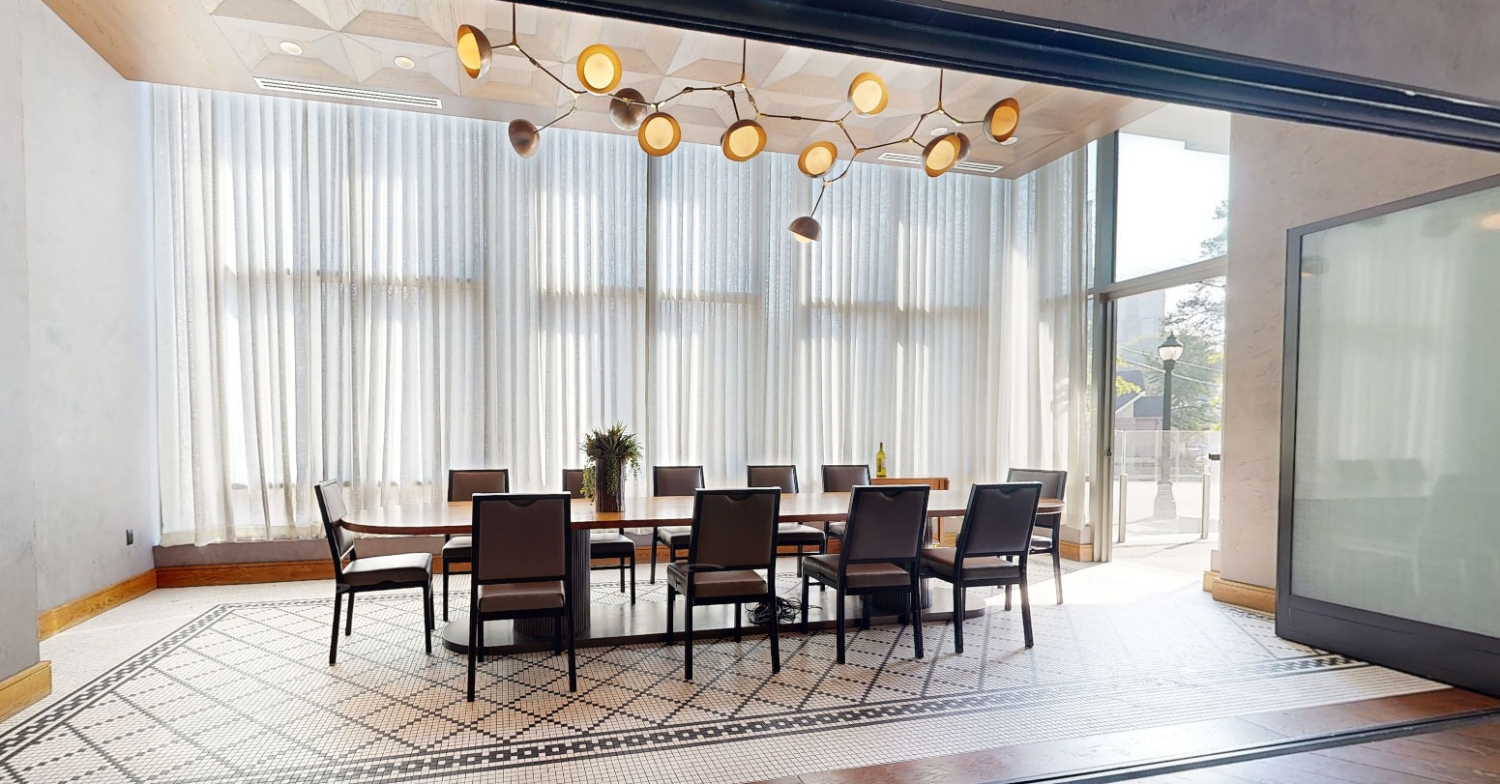
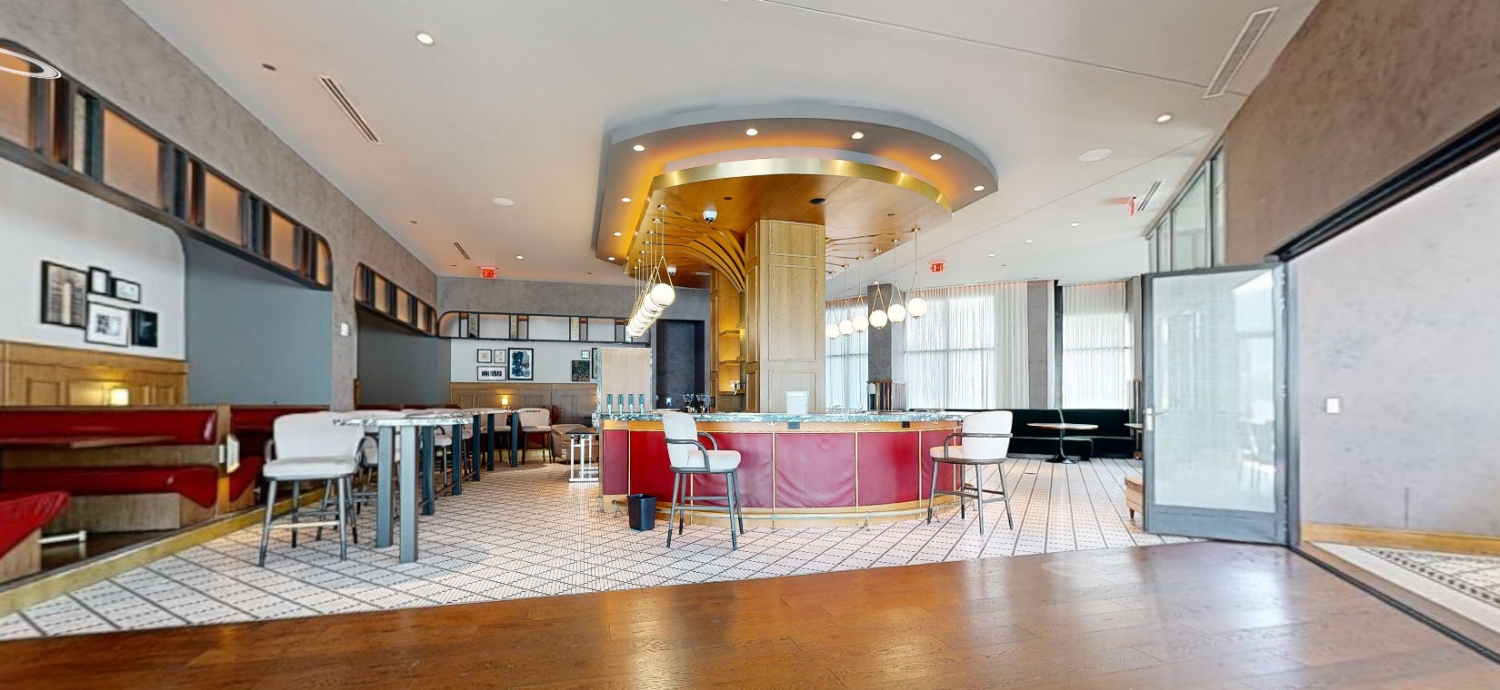
To further support the design team, a Matterport virtual tour was created as part of the project deliverables. The virtual tour allows stakeholders to remotely explore the property from any location using a web browser. Designers, project managers, ownership groups, and consultants can revisit the site digitally at any time without requiring additional travel or site visits. For hospitality renovation projects, virtual tours provide valuable visual context that complements traditional CAD documentation. Team members can reference finishes, furniture layouts, architectural details, and spatial relationships throughout the design process. The combination of LiDAR scanning and Matterport technology creates a comprehensive digital representation of the property, providing both precise measurements and immersive visual access.
Why Hotels and Restaurants Benefit from LiDAR-Based As-Built Drawings
Hospitality renovations frequently involve complex existing conditions that must be documented accurately before design work begins. Hotels, restaurants, conference centers, resorts, and mixed-use hospitality properties often contain decorative architectural elements, varying construction methods, and numerous mechanical systems that require careful coordination.
LiDAR scanning helps eliminate many of the risks associated with incomplete or inaccurate field measurements. By capturing millions of data points throughout a property, project teams gain access to reliable information that supports better planning, more accurate drawings, and improved coordination.
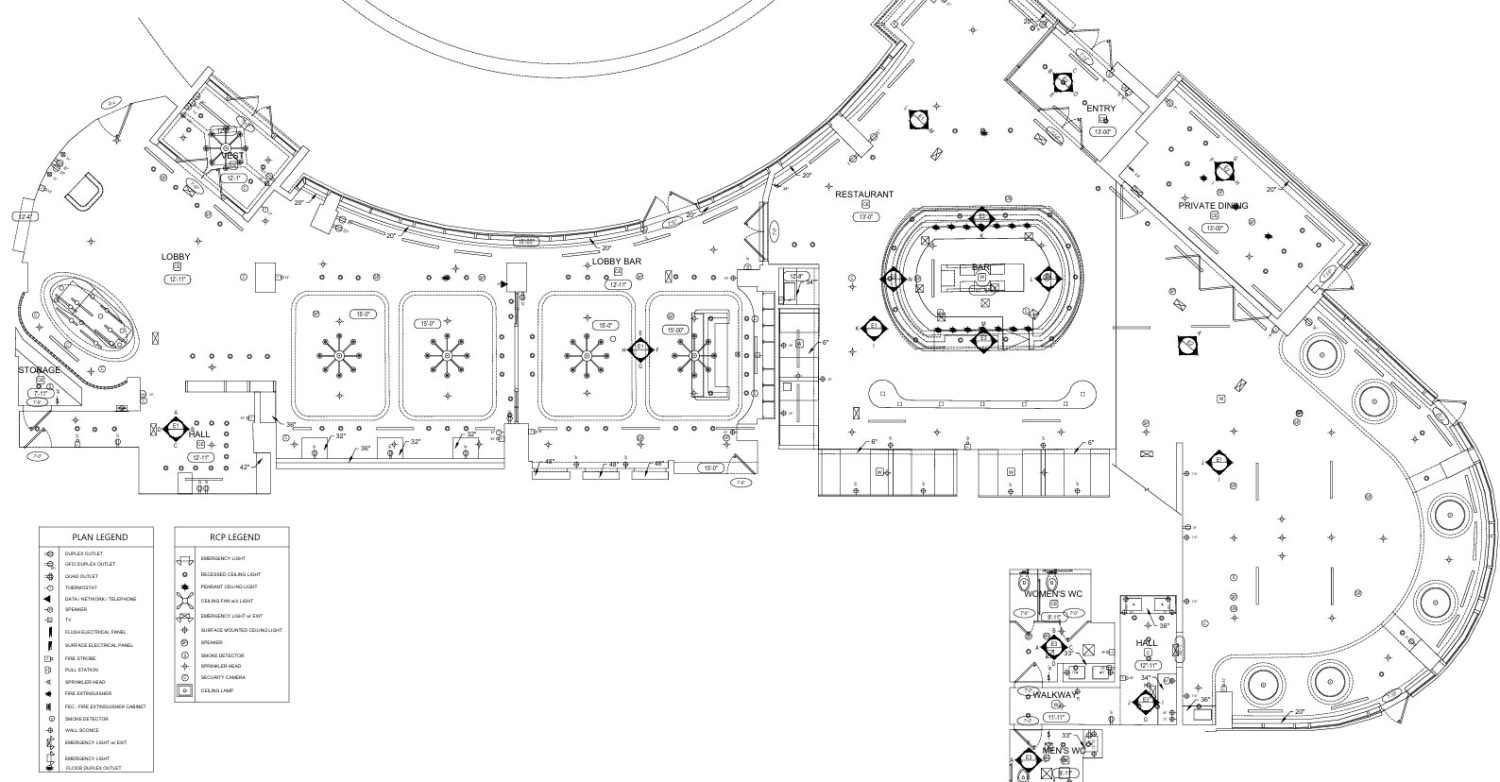
For this Buckhead Atlanta hotel renovation, the use of LiDAR technology allowed Scan Skunks to quickly capture existing conditions, document intricate architectural details, and deliver the floor plans, reflected ceiling plans, interior elevations, and Matterport virtual tour required by the interior design team.
The result was a complete as-built documentation package that provided the foundation needed for a successful renovation of this hospitality property.