

Historic Manhattan Building LiDAR Scanning and 3D Modeling Near Central Park
Project Description
LiDAR Scanning a Historic New York City Landmark
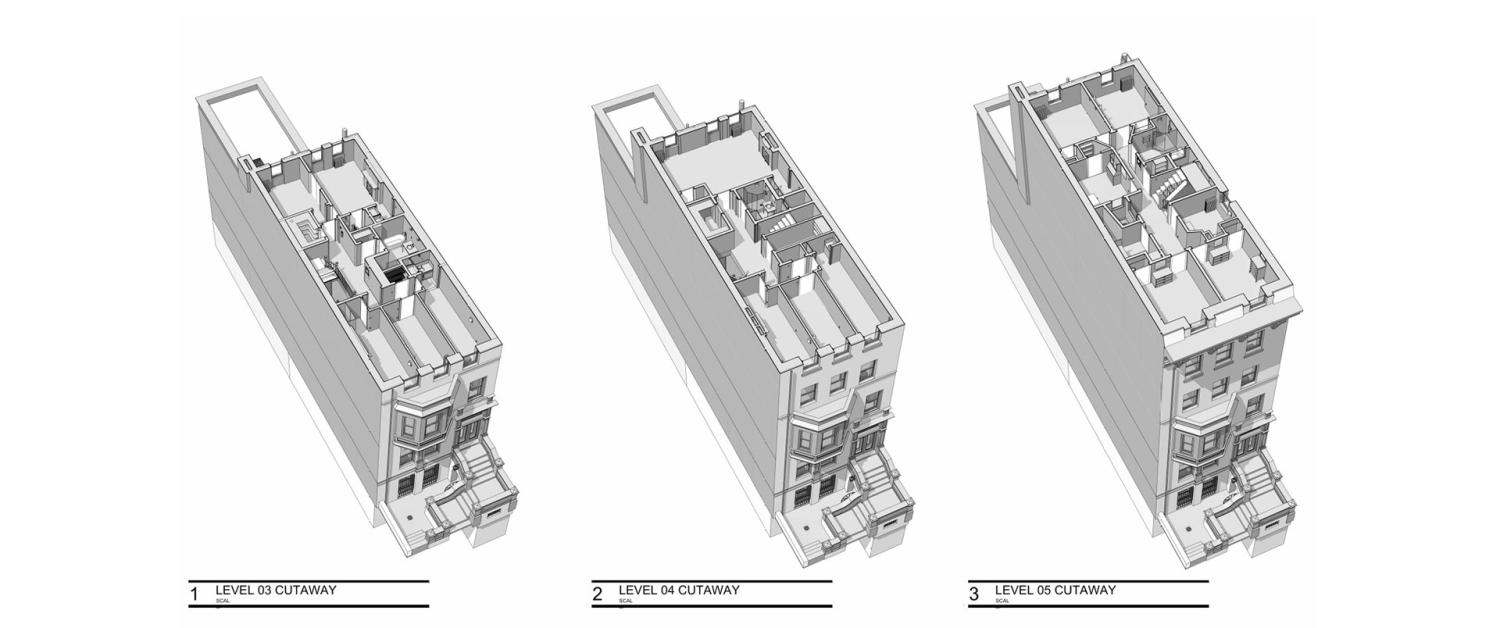
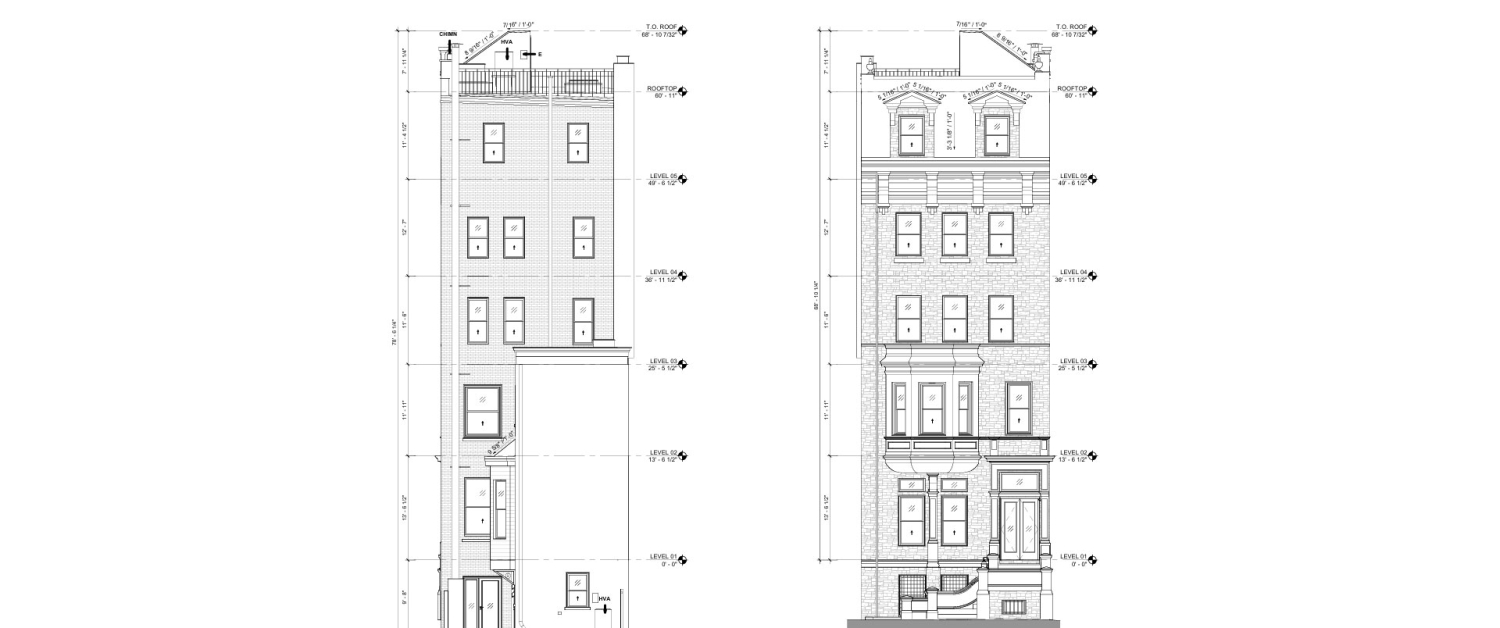
Scan Skunks recently completed a highly detailed LiDAR scanning project in the heart of Manhattan, New York City. This historic seven-story walkup, located just steps from Central Park, serves as a bed and breakfast while also housing long-term tenants. The approximately 7,800-square-foot structure required comprehensive as-built documentation to support future renovation and modernization efforts, including the installation of a new elevator system.
Over the course of two days, the Scan Skunks team utilized advanced terrestrial LiDAR technology to capture accurate existing conditions throughout the building. The project demanded careful coordination, creative problem-solving, and extensive quality control to ensure the resulting 3D model accurately reflected the building's unique geometry and historic character.
Working Within an Occupied Building
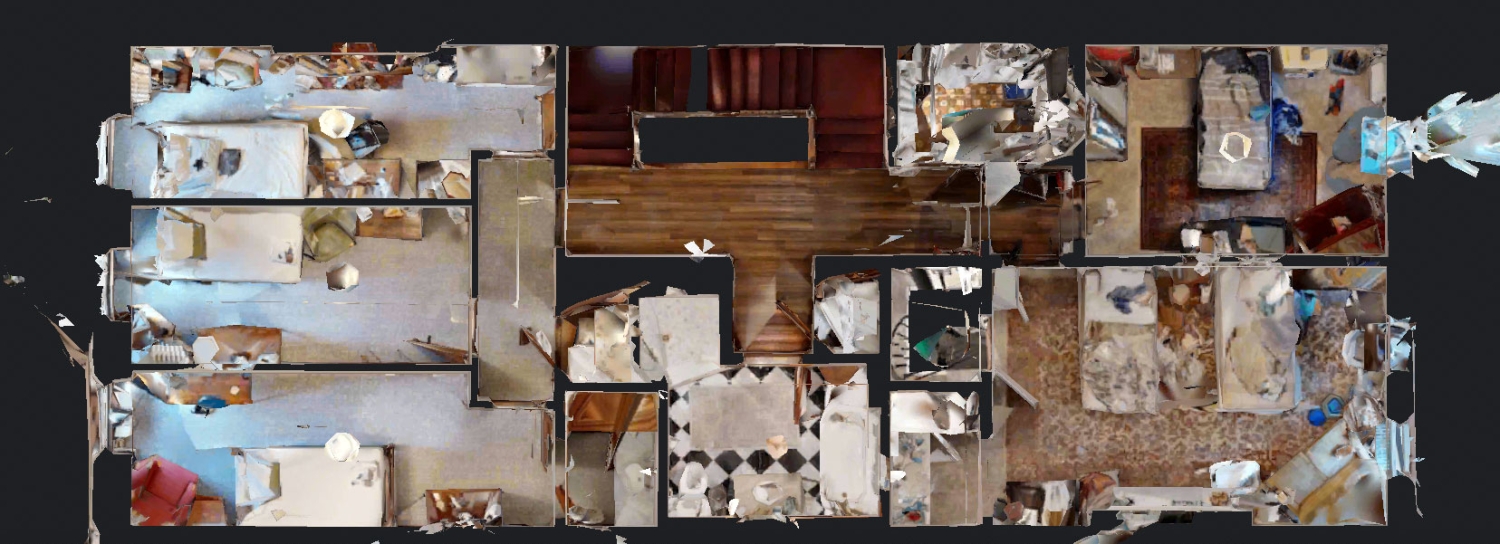
One of the primary challenges of this project was the fact that the property remained occupied throughout the scanning process. As an active bed and breakfast with tenants residing in the building, Scan Skunks had to work around guest schedules, occupied rooms, and limited access windows. Unlike vacant properties, occupied buildings require a strategic approach to data collection. Our technicians coordinated scanning activities to minimize disruptions while still capturing complete coverage of every accessible area. Timing and communication were critical, allowing our team to efficiently move through the building while maintaining the quality standards required for accurate as-built documentation.
Historic structures often contain irregular room layouts, narrow corridors, and unique architectural features that demand additional attention during data collection.
Capturing Accurate Floor Plate Alignment
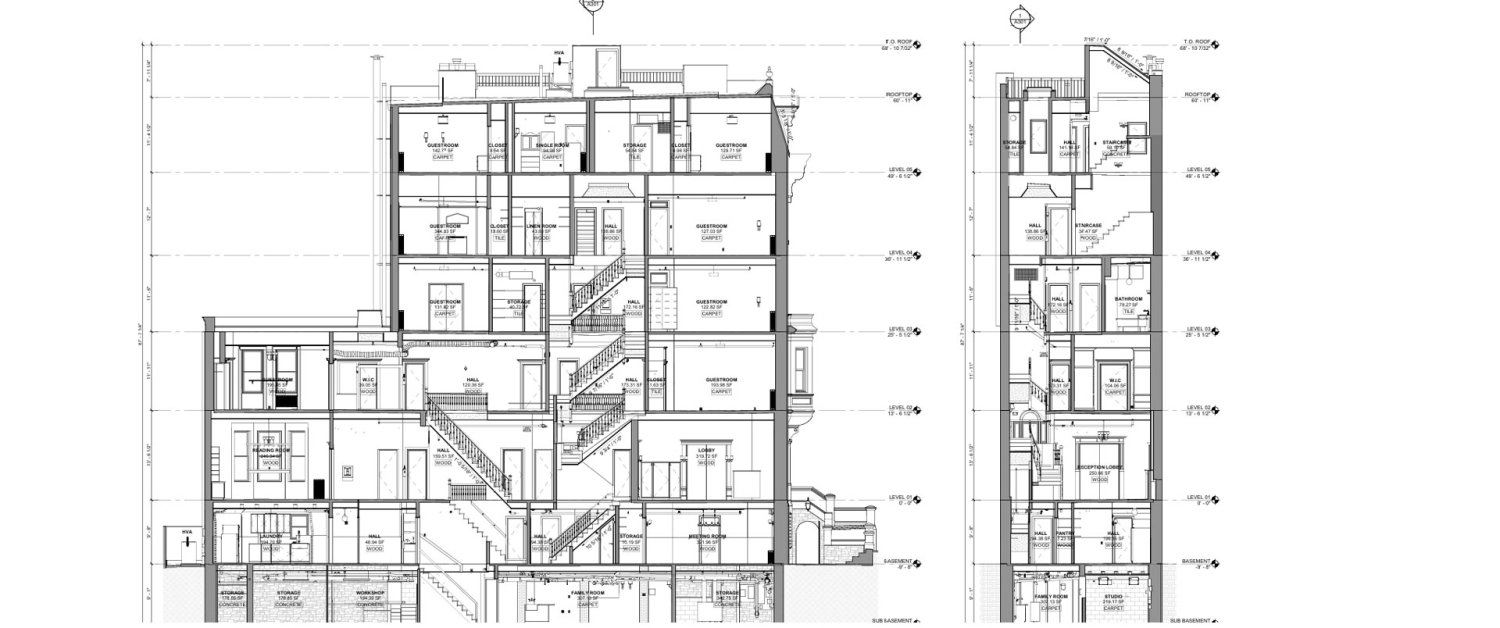
The most technically demanding aspect of the project involved ensuring accurate stacking and alignment of the building's floor plates. The property owner and design team required highly accurate existing conditions documentation to support plans for a future elevator installation.
For any elevator retrofit project, vertical alignment is critical. Small inaccuracies between floors can create significant challenges during design and construction. Because this building was constructed long before modern accessibility standards existed, the floor layouts and structural elements required careful documentation.
Scan Skunks utilized a combination of strategically placed scan positions and rigorous registration procedures to ensure every level aligned properly within the final point cloud. Special attention was given to stairwells, vertical shafts, and structural reference points that connected each floor to the next.
By maintaining tight tolerances throughout the registration process, our team was able to create a highly accurate digital representation of the building that design professionals can confidently use during elevator planning and future renovation efforts.
Overcoming Limited Exterior Access in Manhattan
New York City presents unique challenges for exterior building documentation, particularly in densely developed neighborhoods. This historic structure was nestled tightly between neighboring buildings on a crowded Manhattan street, making traditional exterior scanning methods impractical.
Normally, exterior LiDAR scanning relies on capturing data from multiple viewpoints around a building's perimeter. In this case, adjacent structures and limited street access prevented complete exterior coverage from ground level.
Rather than accepting incomplete data, Scan Skunks developed an alternative scanning strategy. By utilizing roof access and carefully planned scan positions from elevated locations, our team successfully captured critical exterior geometry that would have otherwise been inaccessible. This type of obstacle is normal in New York City As-Built Drawing creation.
This approach allowed us to document roof conditions, upper façade elements, and building relationships while overcoming the space limitations commonly encountered in urban environments. The ability to adapt scanning methodologies to challenging site conditions is one of the reasons architects, engineers, and property owners trust Scan Skunks for complex projects.
Preserving Historic Architectural Details
 Buildings located near Central Park often contain architectural features that reflect New York City's rich history. Accurate documentation of these elements is essential when renovations or modernization efforts are being planned.
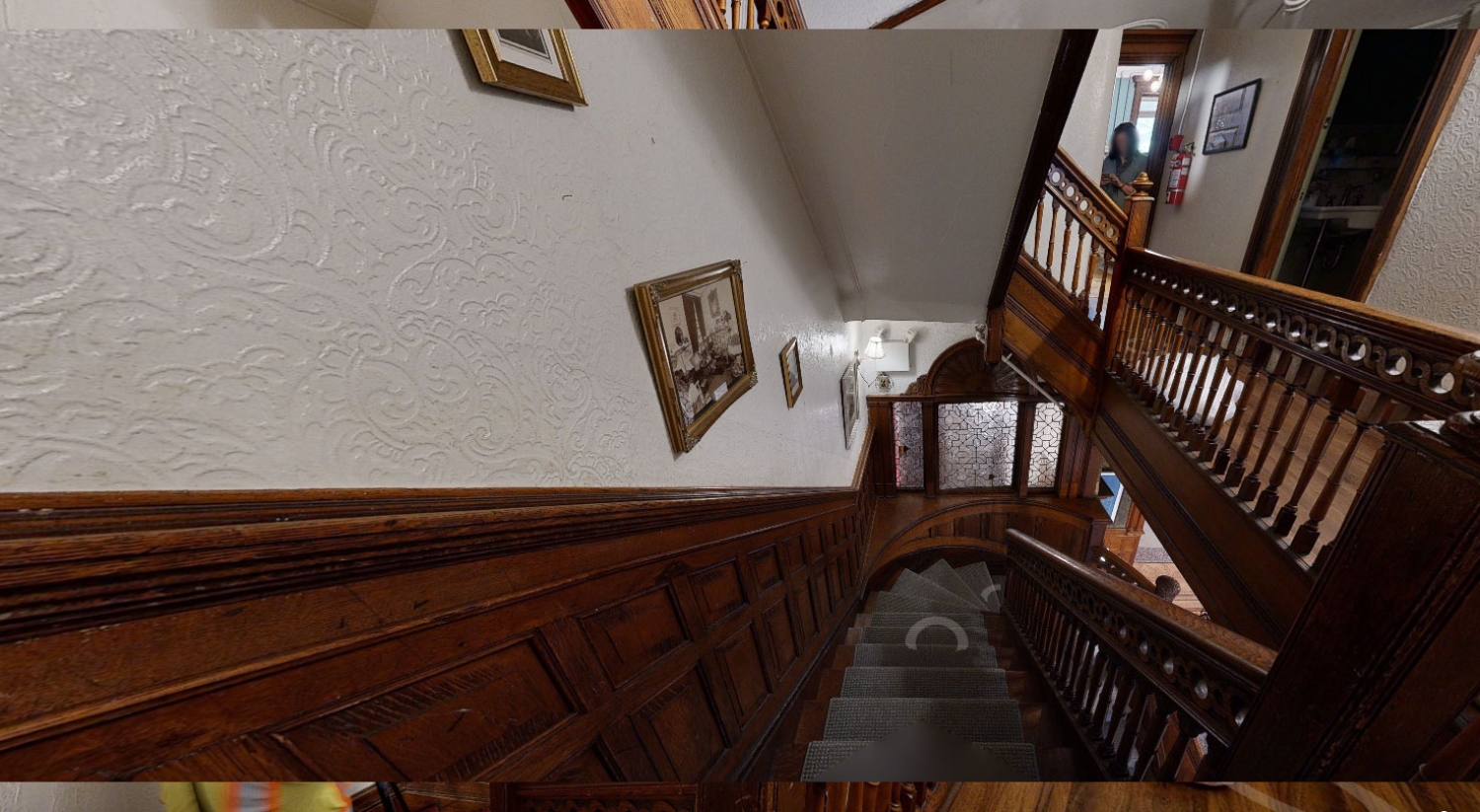
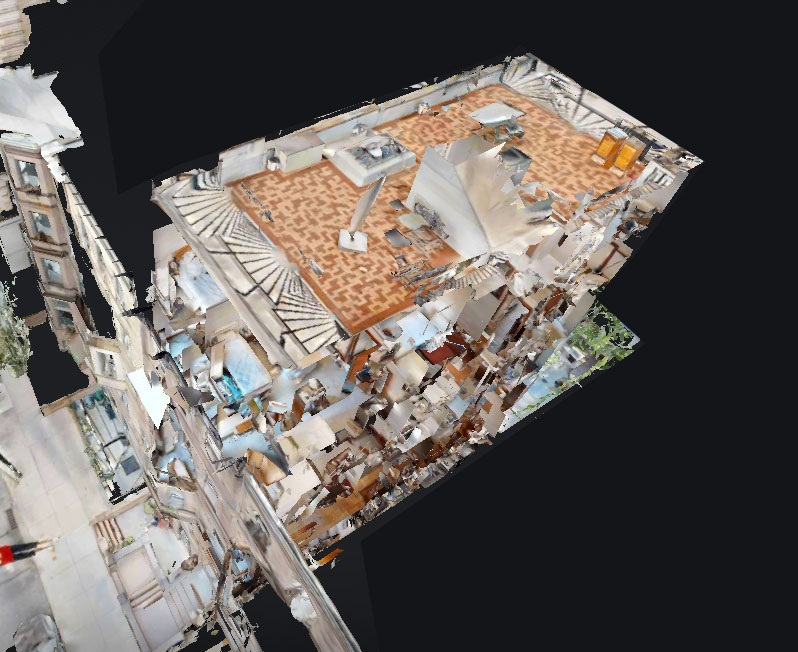
LiDAR scanning provides millions of measurement points that capture existing conditions with exceptional accuracy. Decorative moldings, stair configurations, wall irregularities, ceiling transitions, and structural elements can all be documented without invasive measurements or destructive investigation.
For this project, preserving the building's historic character while creating modern documentation was a key objective. The resulting point cloud serves as a digital archive of the property's current condition while also providing the foundation for future architectural and engineering design.
Delivering a Comprehensive 3D Model
Following fieldwork, Scan Skunks processed the collected LiDAR data to generate a unified and highly accurate point cloud. Advanced registration and quality assurance procedures ensured the data aligned properly across all seven stories.
The final deliverable was a detailed 3D model representing the entire 7,800-square-foot structure. This model provides architects, engineers, and property owners with a reliable foundation for renovation planning, elevator design, accessibility improvements, and future building management initiatives.
The completed digital model captures the complexity of the historic Manhattan property while providing the precision required for modern construction and design workflows.
Why LiDAR Scanning is Ideal for Historic New York City Buildings
Historic properties throughout Manhattan present challenges that traditional measurement methods often struggle to address. Occupied spaces, limited access, irregular construction methods, and decades of renovations can make conventional documentation both time-consuming and prone to error.
LiDAR scanning offers a fast, non-invasive solution that captures millions of accurate measurements in a fraction of the time required for manual field verification. For projects involving renovations, adaptive reuse, accessibility upgrades, or historic preservation, detailed reality capture provides decision-makers with dependable existing conditions information.
The successful completion of this Manhattan project demonstrates how Scan Skunks combines advanced technology, field expertise, and creative problem-solving to deliver accurate as-built documentation even in some of the most challenging urban environments in the country.